 Kate Walton
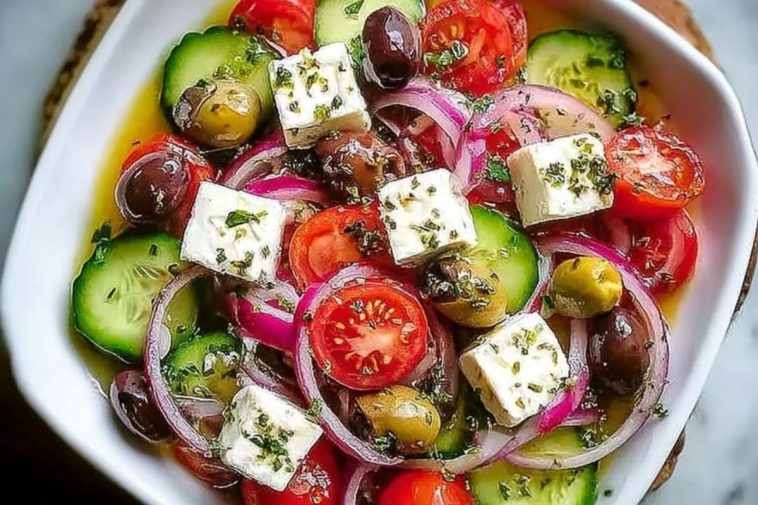

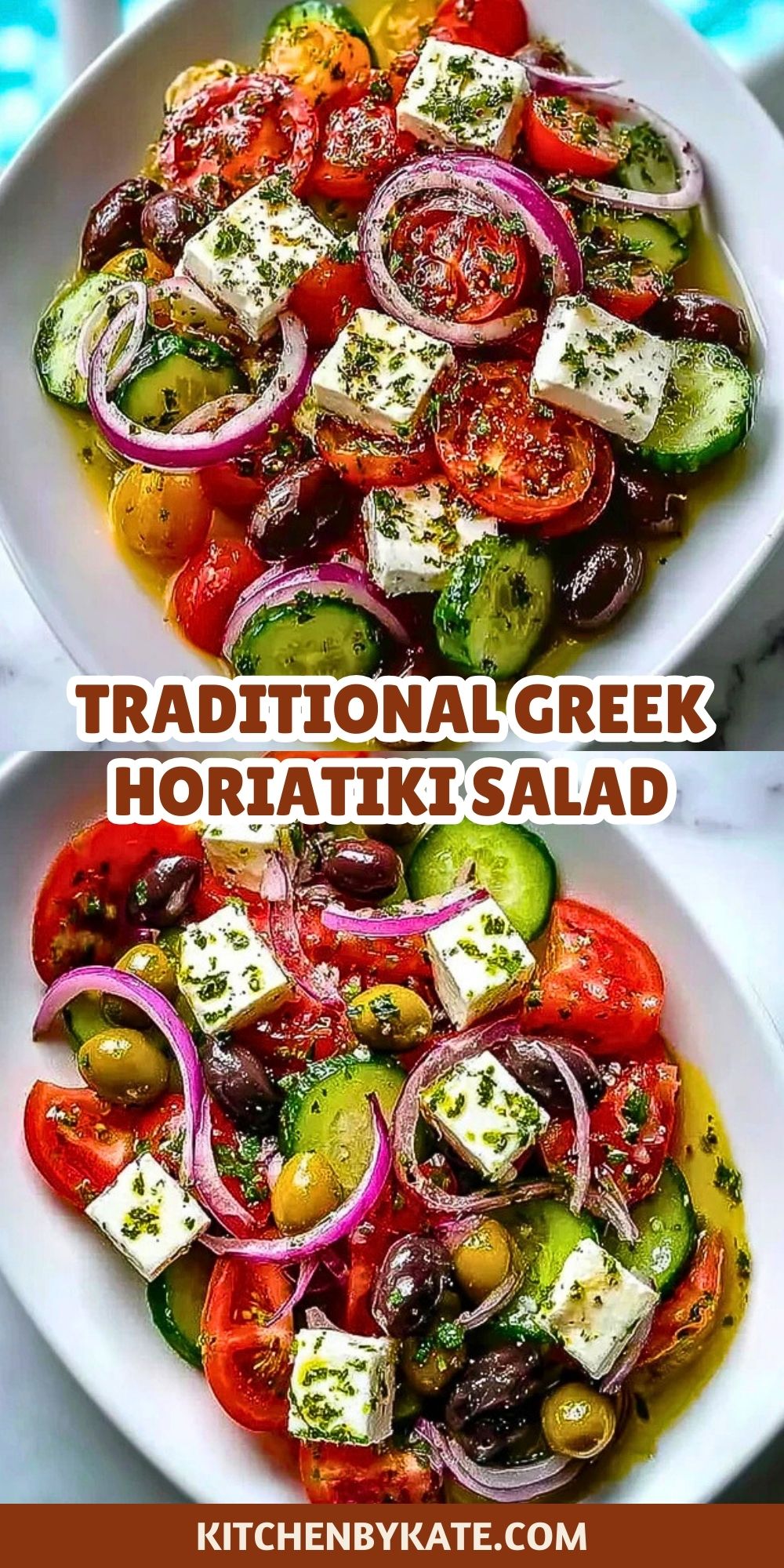
Bursting with vibrant color and rustic Mediterranean flavors, the Traditional Greek Horiatiki Salad is a summer staple that feels both refreshing and satisfying. Made with juicy tomatoes, crisp cucumbers, sharp red onions, briny olives, and creamy feta cheese, it’s all brought together with a simple dressing of olive oil and oregano. This salad doesn’t hide behind fancy techniques or ingredients—it’s about letting quality produce shine.
Perfect as a light lunch, an appetizer, or a side to grilled meats, Horiatiki is timeless and transportive. One bite and you’re under the Greek sun, near a whitewashed taverna by the sea. It celebrates honest, wholesome food at its best. No lettuce here—just bold textures, clean flavors, and nourishing ingredients.
Why You’ll Love This Traditional Greek Horiatiki Salad
- Authenticity: This is as classic as Greek salad gets. No frills, no fillers.
- Healthy & Fresh: Packed with hydrating veggies and healthy fats from olive oil.
- Quick to Make: No cooking required, ready in under 15 minutes.
- Versatile: Pairs well with grilled chicken, lamb, or as part of a meze spread.
- Naturally Low-Carb & Vegetarian: Great for a wide range of dietary preferences.
Preparation Phase & Tools to Use
Making this salad is all about using simple tools efficiently to respect the ingredients:
- Sharp Chef’s Knife: Essential for clean, uniform slices of tomatoes, cucumbers, and onions.
- Cutting Board: A large, non-slip board gives you space to prep quickly and safely.
- Mixing Bowl: Wide enough to toss your ingredients without bruising them.
- Salad Tongs or Hands: Gentle tossing ensures the feta doesn’t crumble too much.
- Mandoline (Optional): For ultra-thin onion slices that mellow out in flavor.
While the preparation is straightforward, the quality of your produce and olive oil will make all the difference in taste.

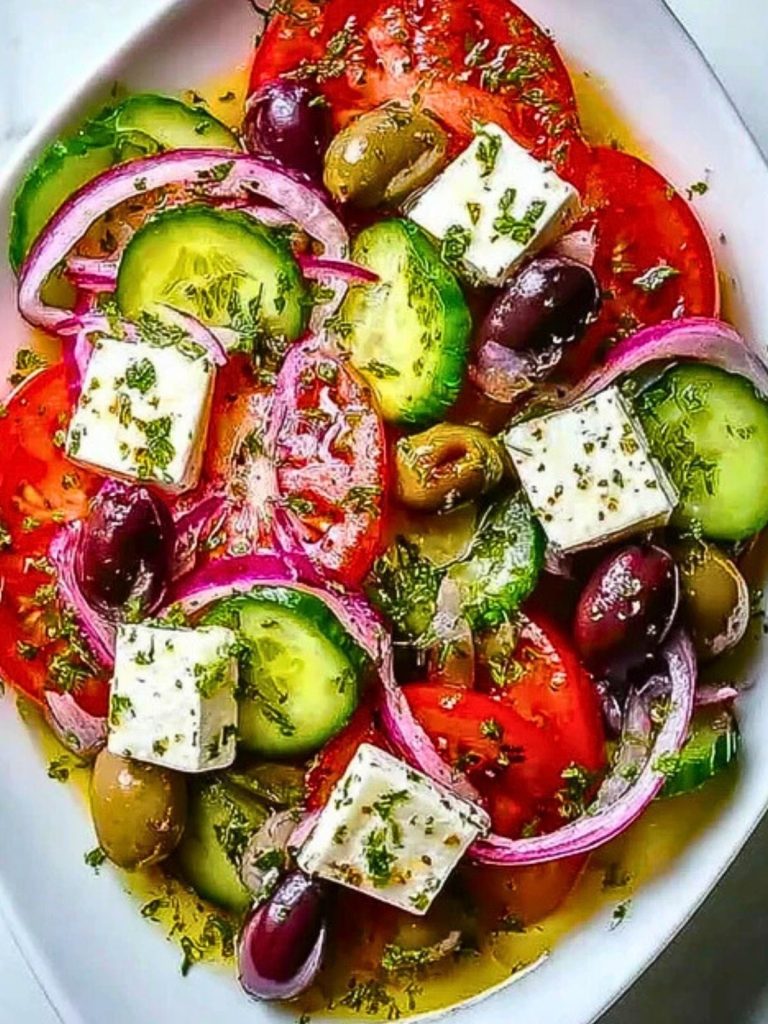
Ingredients for the Traditional Greek Horiatiki Salad
Each component of this salad serves a flavorful and textural purpose:
- Tomatoes: Ripe, juicy tomatoes bring sweetness and vibrant color to the dish. They’re the heart of the salad.
- Cucumbers: Crisp and cooling, they add crunch and keep the salad light.
- Red Onion: Thinly sliced for sharpness and contrast. Their slight bite balances the creaminess of feta.
- Kalamata and Green Olives: Salty and briny, they bring depth and Mediterranean soul to the salad.
- Feta Cheese: A creamy, tangy block of sheep’s milk feta cut into cubes. Never crumbled!
- Extra Virgin Olive Oil: The dressing foundation. Rich, golden, and full of healthy fats.
- Oregano: Dried Greek oregano is key for that earthy, slightly bitter flavor that defines this dish.
- Sea Salt (Optional): Use sparingly if your feta and olives are already salty.
How To Make the Traditional Greek Horiatiki Salad
Step 1: Slice and Dice Your Vegetables
Use a sharp knife to slice the tomatoes into wedges or thick rounds. Peel and slice the cucumber into half-moons, and thinly slice the red onion. Place all in a large bowl.
Step 2: Add the Olives
Scatter a mix of Kalamata and green olives into the bowl. No need to pit if you’re going traditional, but feel free to use pitted for convenience.
Step 3: Layer in the Feta
Top the vegetables with large cubes or slabs of feta cheese. Authentic Horiatiki salad doesn’t crumble the feta—the chunkier, the better.
Step 4: Dress the Salad
Drizzle a generous amount of extra virgin olive oil over the top. Sprinkle with dried oregano, and if needed, a pinch of sea salt.
Step 5: Toss Gently (or Not at All)
Traditionally, Greek salad isn’t mixed. Serve as is, or toss gently just before serving if you prefer everything coated.
Serving and Storing Your Traditional Greek Horiatiki Salad
This salad is best served immediately while the vegetables are crisp and the feta holds its form. It makes an excellent side for grilled meats, seafood, or as part of a summer picnic spread. Pair it with crusty bread to soak up the olive oil and juices.
If you’re prepping ahead, slice the veggies and store them in separate airtight containers in the fridge. Combine and dress the salad just before serving. Once mixed, leftovers can be stored for up to 1 day, but note that the tomatoes and cucumbers will release liquid, softening the overall texture.
Frequently Asked Questions
What type of feta should I use for Greek salad?
Choose a block of authentic Greek sheep’s milk feta. It should be firm but creamy, and packed in brine for best flavor.
Can I add lettuce to this salad?
Traditionally, no. Horiatiki is meant to be lettuce-free. But if you’re customizing, romaine can be a fresh addition.
Is it okay to crumble the feta?
For authenticity, stick with cubes or slabs of feta placed on top. It makes a better presentation and texture.
How do I reduce the sharpness of red onions?
Soak the sliced onions in cold water for 10–15 minutes. This mellows their flavor without losing their crunch.
Can I make this salad vegan?
Yes! Simply omit the feta or use a plant-based alternative. The rest of the ingredients are naturally vegan.
What protein goes well with Horiatiki salad?
Grilled chicken, lamb chops, shrimp, or even falafel are excellent companions to this salad.
Want More Salad Ideas with a Mediterranean Twist?
If you enjoyed the fresh, bold simplicity of this Traditional Greek Horiatiki Salad, you’ll love these other bright and satisfying recipes:
- Tzatziki Chicken Veggie Naan Pizza for a fusion flatbread with creamy Greek flair.
- Green Olive and Feta Cheese Dip for an appetizer that pairs beautifully with pita.
- Mediterranean White Beans & Greens if you want a fiber-packed companion to your salad.
- Baked Greek Yogurt Chicken for a creamy, protein-rich main to pair with Horiatiki.
- Fresh & Flavorful Classic Greek Salad for another traditional take you can compare and enjoy.
Save This Pin For Later
📌 Save this recipe to your Pinterest salad board so you can revisit it anytime: Kitchen by Kate Pinterest Recipes
And when you make it, let me know how yours turned out! Did you stick to the traditional or add your own twist? Maybe a sprinkle of capers or a drizzle of lemon?
I always love seeing how these recipes come alive in your kitchens. Drop your variations or questions below – let’s make fresh food even more fun!
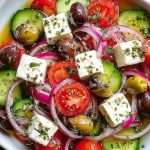
Traditional Greek Horiatiki Salad
- Total Time: 15 minutes
- Yield: 4 servings
- Diet: Vegetarian
Description
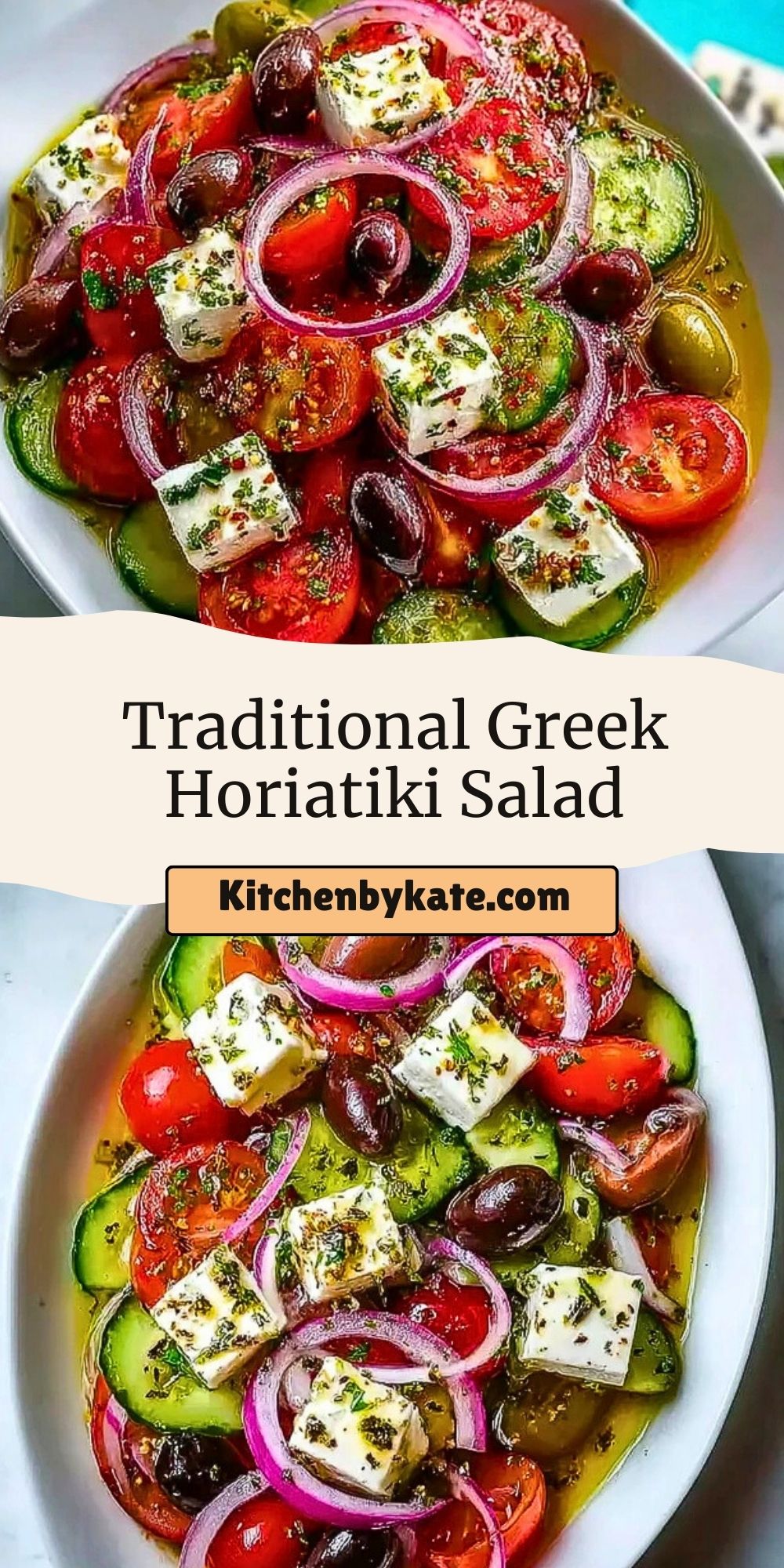
This Traditional Greek Horiatiki Salad recipe is a refreshing, authentic Mediterranean dish featuring juicy tomatoes, crisp cucumbers, briny olives, red onions, and creamy feta. A quick, healthy, and naturally low-carb salad perfect for summer meals, BBQs, or light lunches. No lettuce, just bold flavors with olive oil and oregano.
Ingredients
3 large ripe tomatoes
1 cucumber, sliced
1 small red onion, thinly sliced
1⁄2 cup Kalamata olives
1⁄2 cup green olives
6 ounces block feta cheese, cut into cubes
3 tablespoons extra virgin olive oil
1 teaspoon dried Greek oregano
Salt to taste (optional)
Instructions
1. Slice the tomatoes into wedges or thick rounds. Slice the cucumber into half-moons and thinly slice the red onion. Add all to a large mixing bowl.
2. Add the Kalamata and green olives to the bowl with the vegetables.
3. Top the mixture with large cubes or slabs of feta cheese. Do not crumble.
4. Drizzle extra virgin olive oil over the salad. Sprinkle with dried oregano and sea salt if needed.
5. Serve as is or gently toss right before serving.
Notes
For a milder onion flavor, soak the red onions in cold water for 10 minutes before adding to the salad.
Use the highest quality extra virgin olive oil you can find—it truly makes a difference in flavor.
Always use block feta cheese in brine for authentic taste and ideal texture.
- Prep Time: 15 minutes
- Cook Time: 0 minutes
- Category: Salad
- Method: No-cook
- Cuisine: Greek
Nutrition
- Serving Size: 1 cup
- Calories: 220
- Sugar: 5g
- Sodium: 520mg
- Fat: 19g
- Saturated Fat: 6g
- Unsaturated Fat: 12g
- Trans Fat: 0g
- Carbohydrates: 8g
- Fiber: 2g
- Protein: 5g
- Cholesterol: 25mg